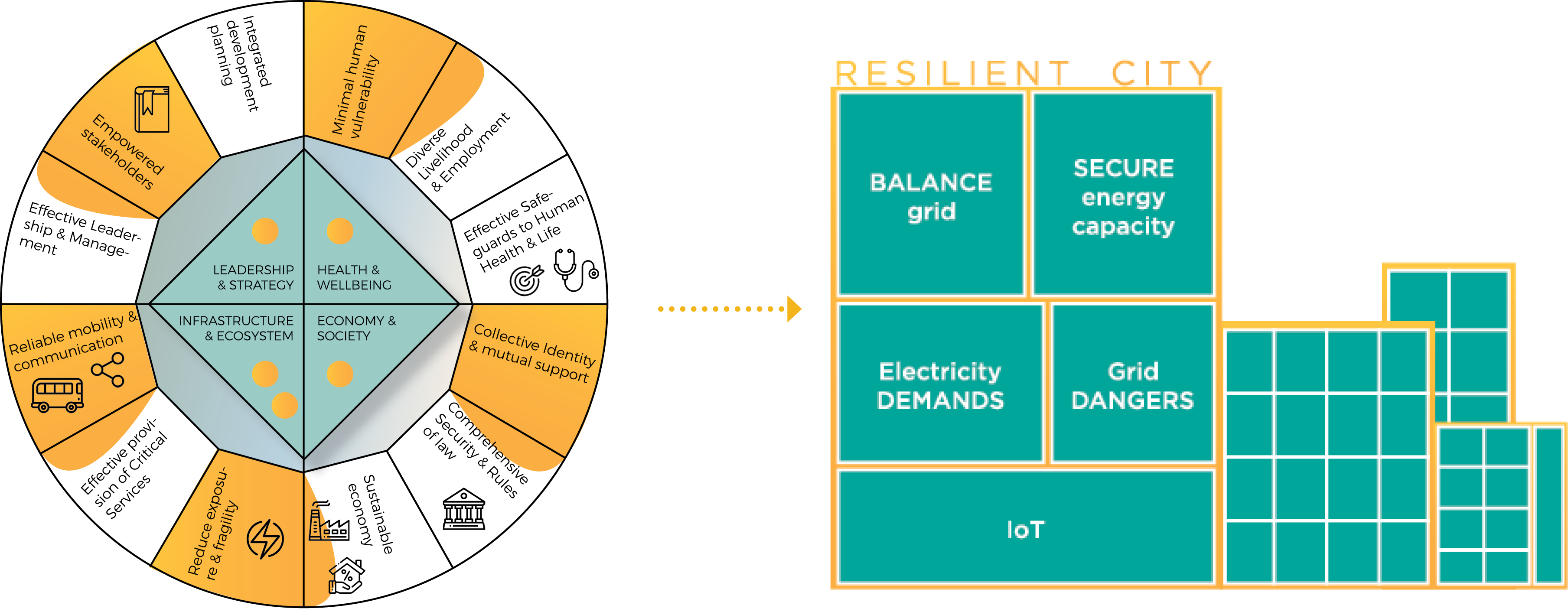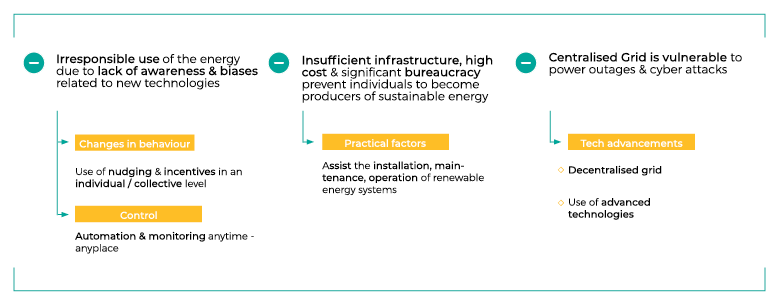
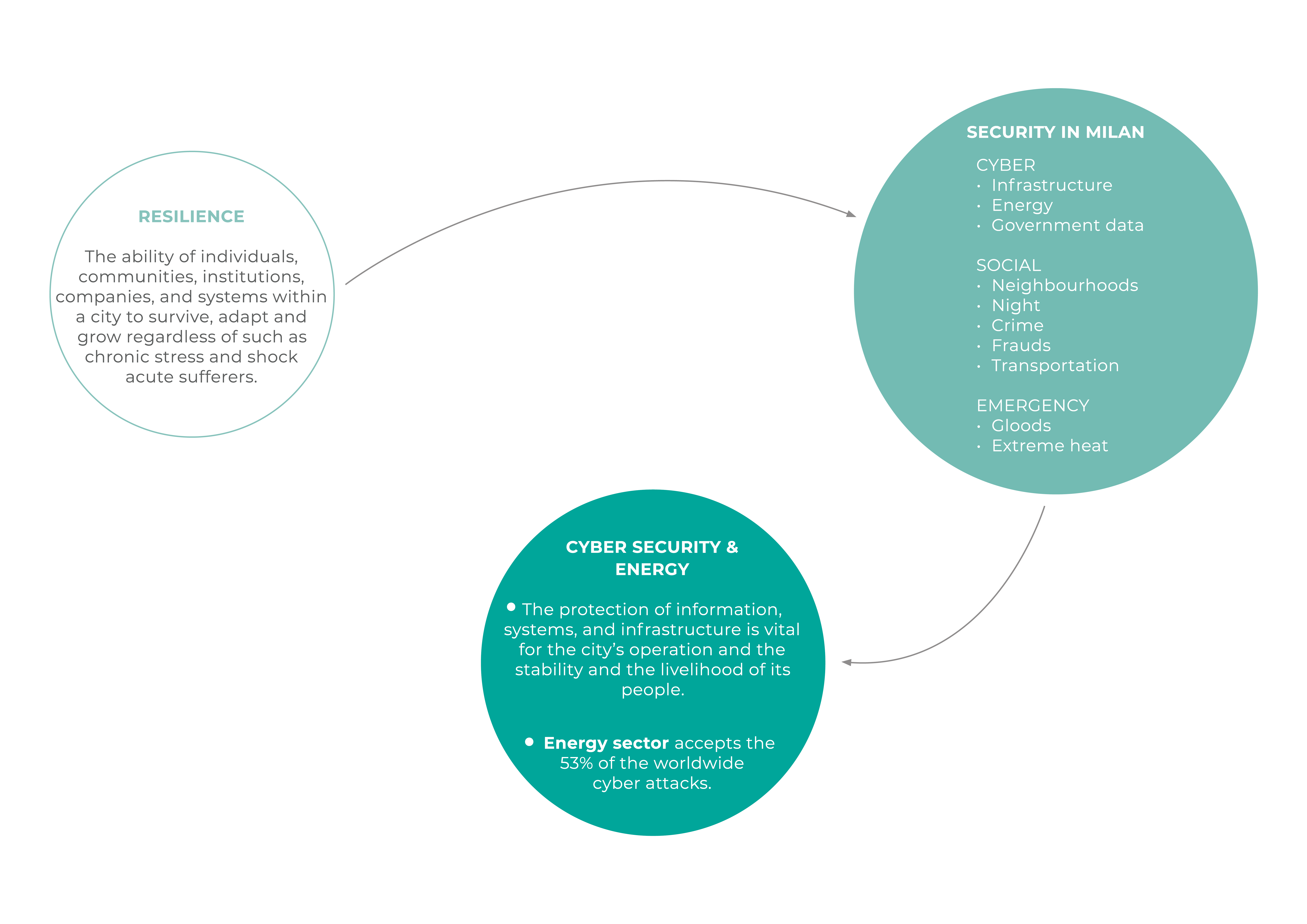
Climate and demographic changes, as well as the growth of the cities, create major stresses in urban areas. While people aim to sustain health & wellbeing, communities have to ensure their capacity to recover against socks. Under the broad context of urban resilience, develop services that can guarantee the security of the Milanese citizens.
Services that assist the reduction of energy consumption in both individual and organisational level and facilitate the use of alternative energy sources in private and public spaces.
We first defined the resilience concept with our partner representatives from Comune di Milano and gained an understanding of the stresses that Milano city confronts. By conducting further research, such as interviews, case studies analysis, online sources, we gathered the insights needed to form our approach.
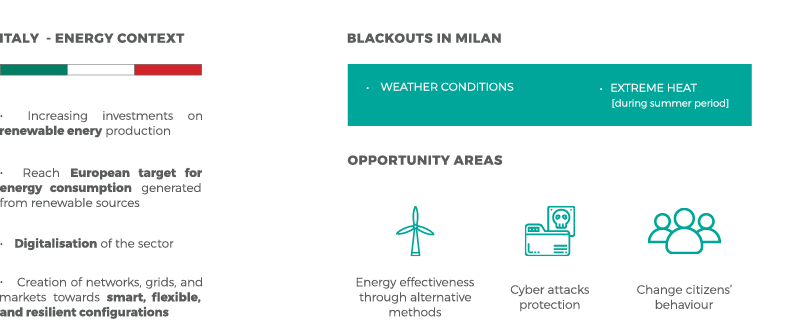
Due to the complexity -behavioural, technical, financial, administrative, legal- of the system under development, it was essential for the team to collect iteratively feedback, gather and analyse insights so that we come up with our final concept.
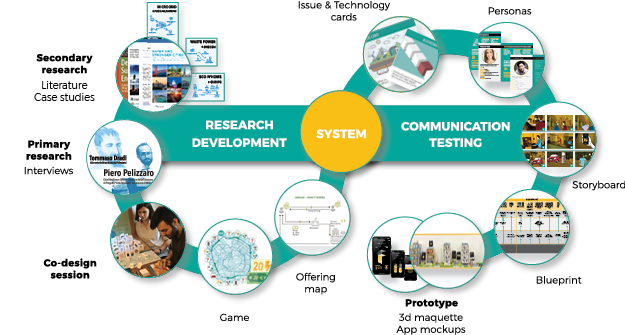
Identification of key stakeholders and collection of feedback by them during the whole design process was essential in order to form a system that could benefit all of them and would serve our initial goal for securing the energy capacity of the city of Milan.
"Safer city is a responsive city. It allows citizens to withstand obstacles and operate regularly in the fields of transport, health, energy, natural catastrophes, cyber attacks and many more"
Pelizzaro, 2018
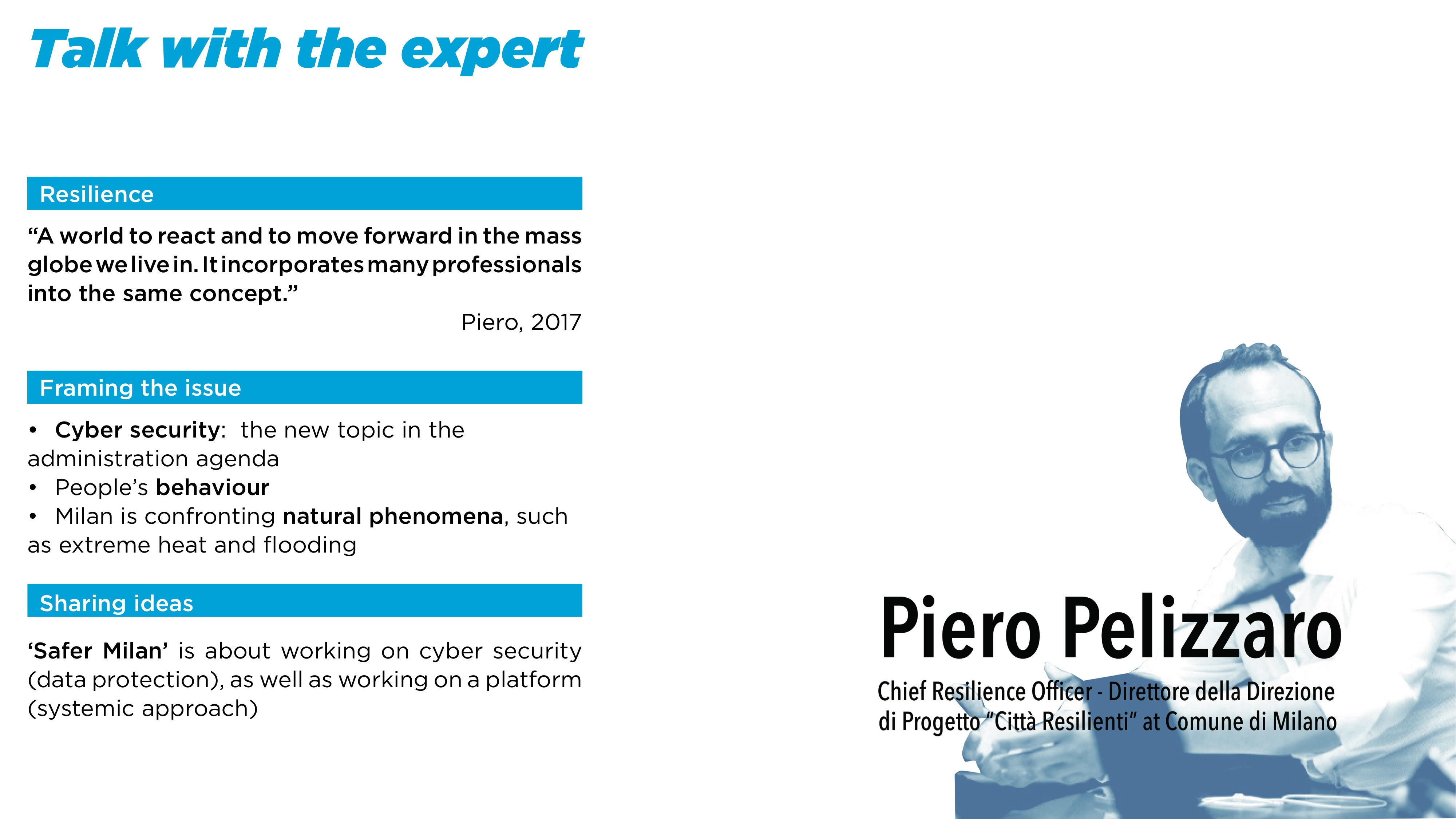
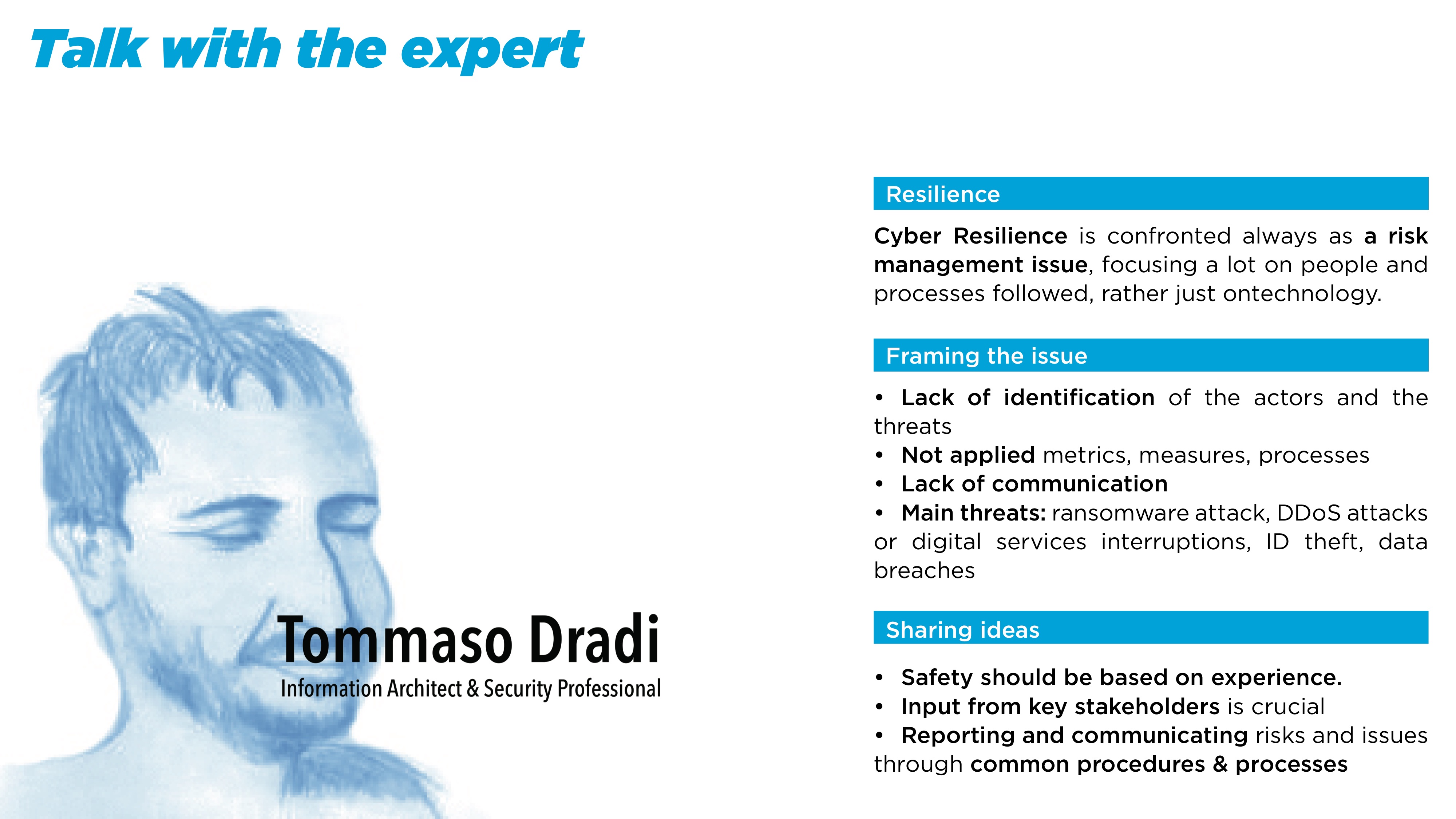
Starting from the Municipality di Milano, we came first into contact with the Chief Resilience Officer for the city of Milan and the Head of IT department in Municipality, followed by interviewing engineers specialised in the energy distribution in cities. At the end we received input from the representatives of the two energy companies in Italy. This helped us gain an understanding of the broader issues the Italian north energy sector may confront and collect insights for the further development of the system.
Co-design sessions were developed in order to get feedback and explore new ideas with the participants. To make the most of e session and gather useful insights we created four different tools and used them with the order presented below.
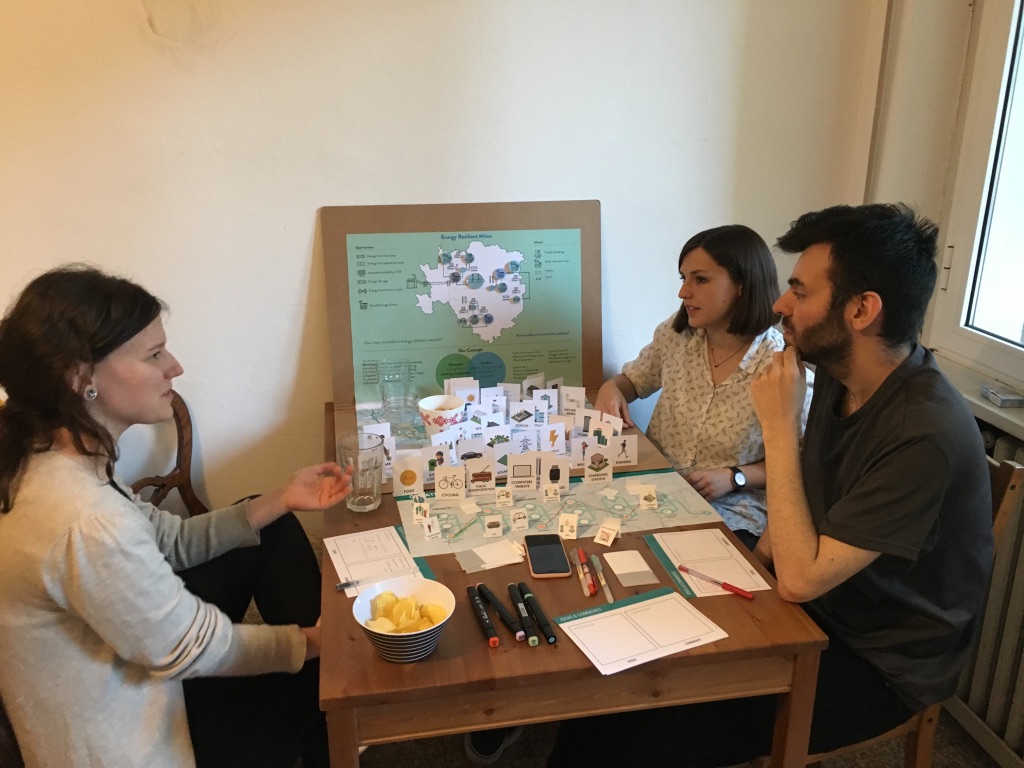
The goal is to make participants aware of the energy issues in urban areas, introduce them to dynamic actions (eg. producing, buying & selling energy), as well as to the benefits acquired in both individual and collective level.
Key partners & energy issues cards are presented to participants. . At the end, 3 sharing electric energy concepts are introduced to them:
1. Share with the community
2. Sell to the municipality / others
3. Share between individuals
Within the "sharing energy" context, participants were invited to create their ideal customer journey on the template given to them.
Upon a summary of the different topics developed in the previous stages, participants got the opportunity to suggest their ideas and add further comments related to the project.
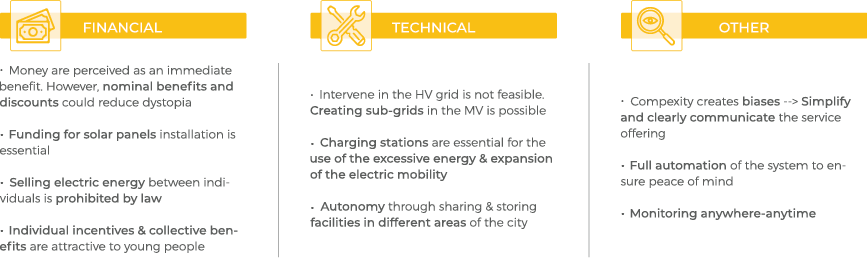
The interviews & the co-design sessions assisted us in the collection of key insights useful to understand clearly the design problems of the under development service-system, as well as the value we should aim to create for the various stakeholders.
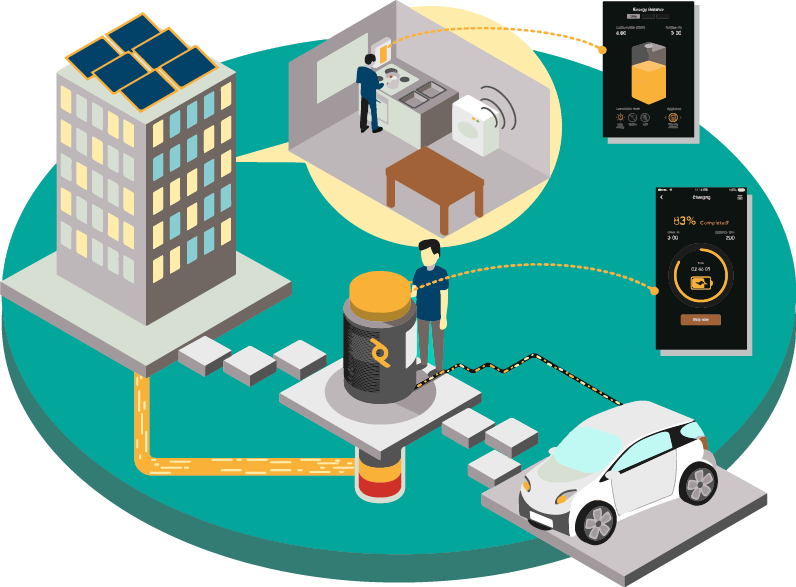
OpenPower aims to put the people at the centre of the energy production system; it offers the tools to create a self sufficient community of people, able to generate, share and consume energy coming from renewable sources within the urban network.
In this way, electric grid balances can be secured and high electric demands, malfunctions or cyber attacks may not affect essential functions in the cities.
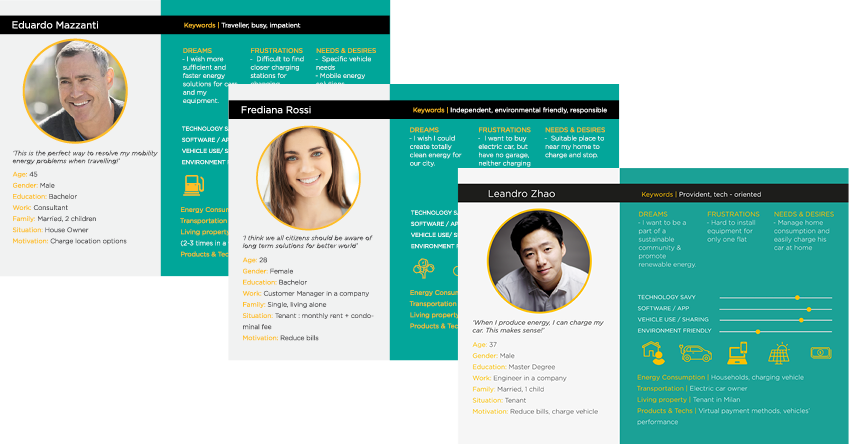
Three different personas were identified; end users were categorised either as producers, consumers or prosumers of energy. The OpenPower system offers the capabilities to Milanese citizens to produce, use and share the electric energy, and the opportunity to Milanese visitors to benefit from the consumption of excessive energy.
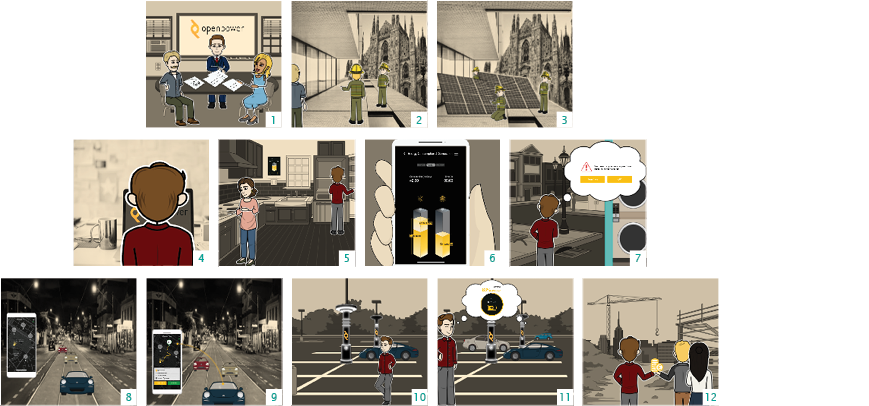
The service offerings have been developed in three levels. Starting from the installation phase, moving to the in-house and outside the house use, new users, interactions and touchpoints are added in the system.
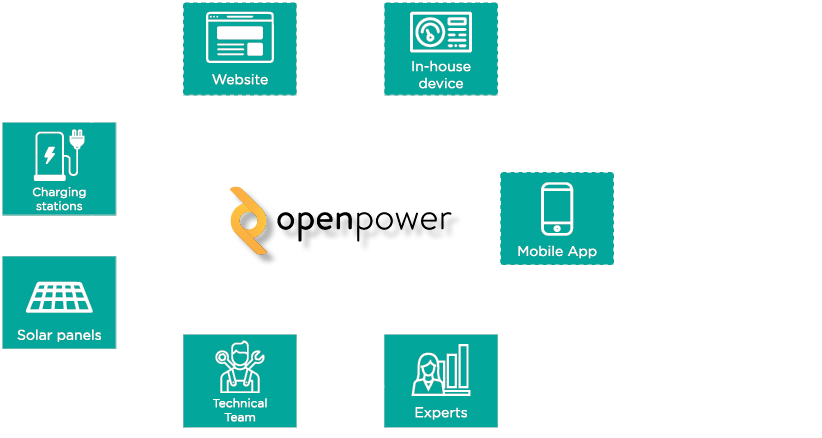
The above touchpoint map showcases the direct channels of interaction between the users and the Open power system.
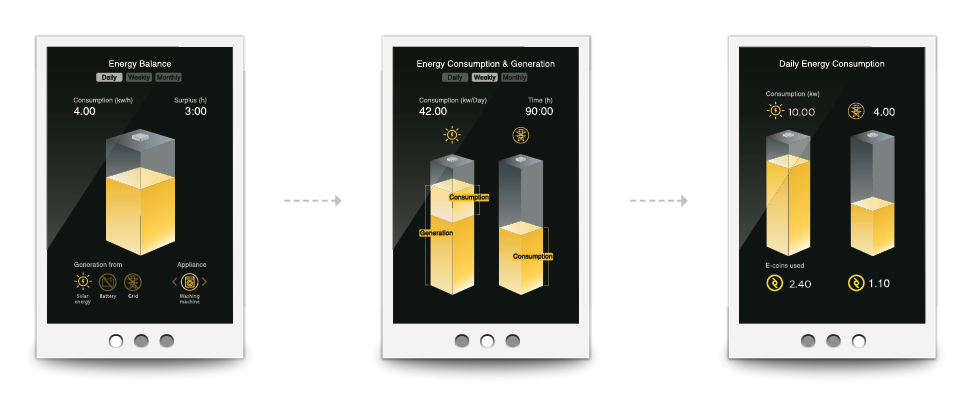
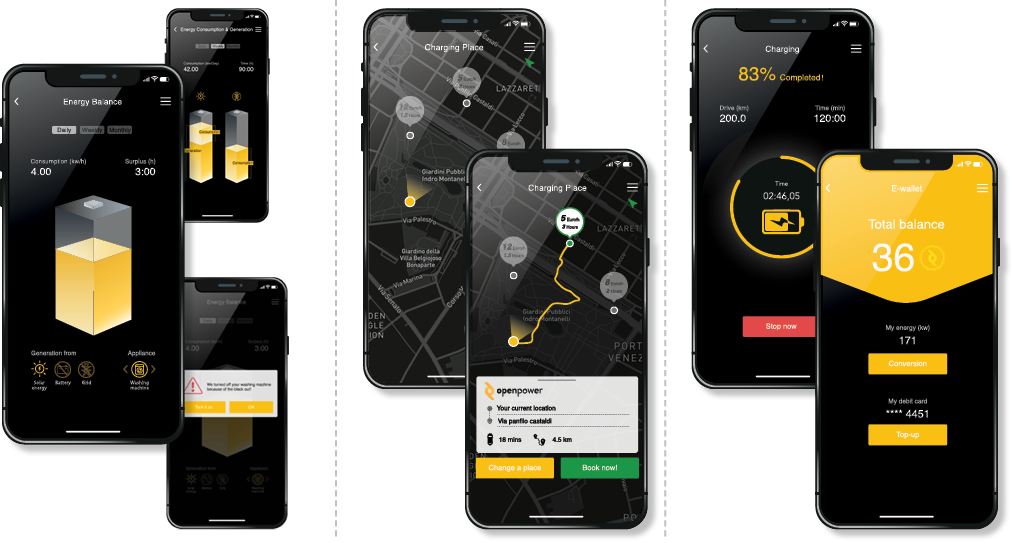
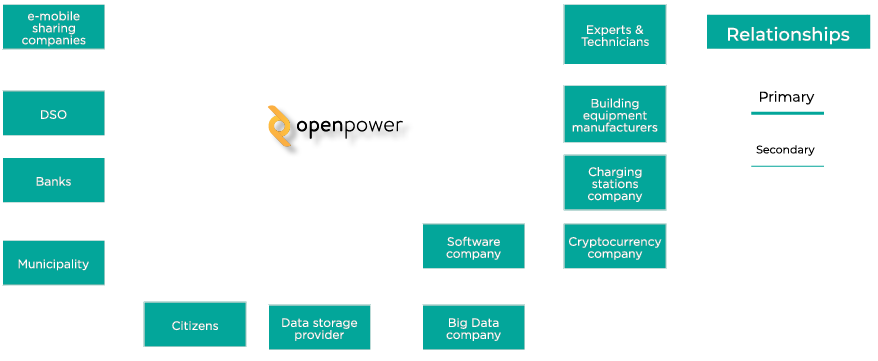
The different key stakeholders and their roles within the new system were identified. Understanding and clearly communicating the value - benefits & obligations - for the different actors has been essential for their engagement during the development as well as the implementation stages.
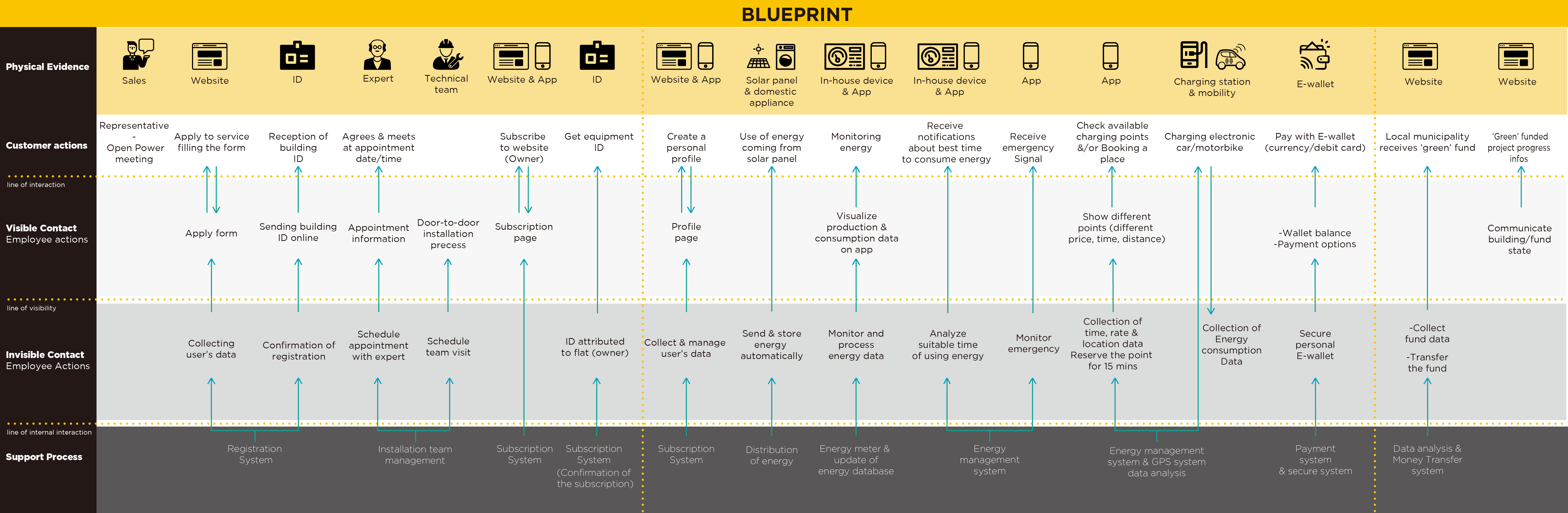
Important customer's actions, visible and invisible (inter)actions as well as support processes of the system, are all illustrated in the OpenPower service blueprint.
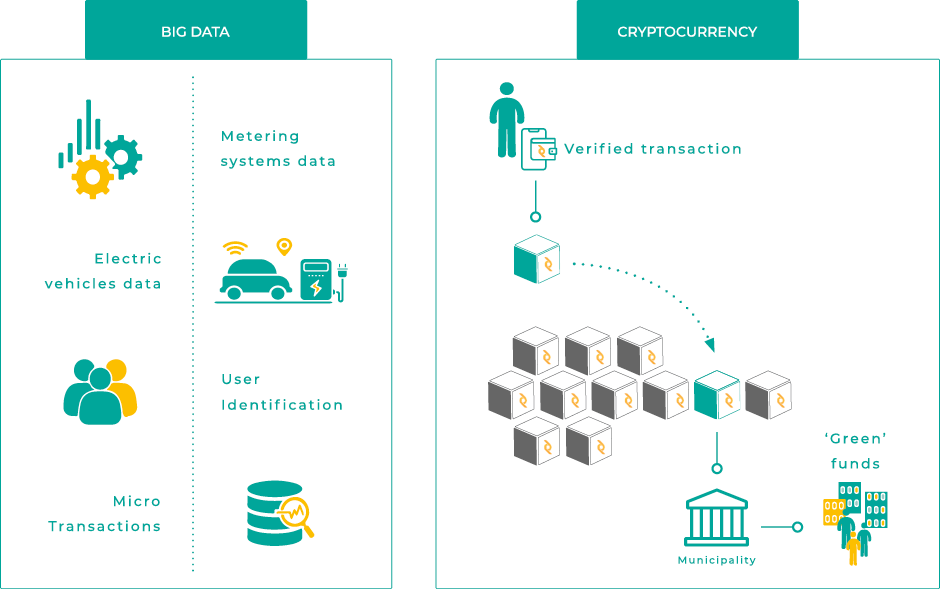
Open Power embedded network makes use of Big Data capabilities - organise, analyse and create meaningful patterns and insights - and Blockchain based cryptocurrency - control monetary units, ensure stability and rapid transaction settlement. Through these, transparency in transactions for all the parties (citizens-state) can be secured.
Lessons learned
- Expert access is challenging – Finding and meeting field experts on short notice was difficult. We overcame this by leveraging secondary and tertiary contacts.
- No single method fits all – Many participants were unfamiliar with co-design tools, stretching us to become flexible and adapt methods to profiles for richer insights.
- Team alignment is crucial – Diverging ideas can slow progress during concept development. Structured questions and organized data sharing helped us align and move forward.
- Trust takes time – Collaborating across disciplines and cultures required patience. Building trust and understanding each other’s strengths ultimately drove a successful outcome.
My role
I took part in all the stages of the research, analysis and development of the service-system. More specifically, I was in charge for conducting the interviews and gathering insights for the project development. I also conducted the tech research and self-proposed myself as the vector of communicating the information collected through my interaction with technical experts to the designers of my team. Finally, I was responsible for the video copywriting.
My deliveries
Value network map
Service offering map
Touchpoints map
Blueprint map
Insights report
Technology analysis & integration
Final presentation